 Be Very Careful where you Tread!
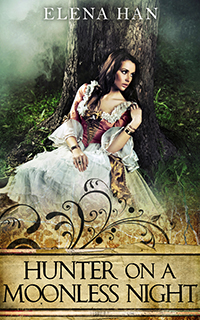
I have always been fascinated by toadstools and fungi, finding the sight of them particularly magical due to their connection with fairies, whether they occur singly or in a what I was told as a child is a fairy ring. I thought that I would look into the folklore and legends surrounding them in the run up to Halloween and reflect on their appearance in a book that I have read recently, Elena Han’s Hunter on a Moonless Night, click for my review. Although not set at Halloween, it is nevertheless a short, entertaining and tasty erotic dark fantasy read for this time of the year and which fits in well with the images that writing this post conjure up for me. The novella has a scene with a fairy ring that has magical qualities and plays a key role in the fate of the heroine. For some spine chilling book recommendations that we’ve reviewed which would make suitable Halloween reads scroll down.
 Whilst we are not lucky enough to have a fairy ring in our garden, we do have a number of toadstools in our lawn, hence the pic. According to what I have learned from Wikipedia, one of the largest fairy rings ever found is near Belfort in France, thought to be about 600m in diameter and over 700 years old – how hufungus is that (apologies for the terrible pun)!
There are a host of traditions and folklore surrounding fairy rings, cited on Wikipedia and sites such as Envirinmentalgraffitti.com, (scroll down for the links). They are known as ronds de sorciers ‘sorcerers’ rings’) in France and Hexenringe (‘witches’ rings’) in Germany. European superstitions tend to warn against entering a fairy ring or dire consequences will follow, from curses to loss or an eye or worse…..
In English, Scandanavian and Celtic mythology, fairy rings are said to be the result of elves or fairies dancing. British folklorist Thomas Keightley noted that in Scandanavia in the early Twentieth Century it was believed that fairy rings (elfdans) arose from the dancing of elves and whilst entering an elfdans would permit one to see the elves it could put the person in thrall to them and their illusions. In the British Isles fairy rings are regarded as dangerous and best avoided, lest the fairies become angry and curse the interloper, who may be unable to leave the circle or be forced to dance to the point of exhaustion, death or madness. Entering the fairy ring on May Eve or Halloween night is also thought to be particularly dangerous.
Fairy rings also feature in literature: Shakespeare mentions them in A Midsummer Nights Dream and The Tempest and Thomas Hardy uses a a fairy ring as a symbol of lost love in the Mayor of Casterbridge, the character of Michael Henshaw passes a fairy ring and remembers that he last saw his wife Susan there when he sold her to a sailor in a drunken rage.
In some parts fairy rings are regarded as omens of good luck – the Welsh believe that mountain sheep eating fairy ring grass flourish and so do nearby crops. What do you think? Will you be avoiding fairy rings on Halloween or will you be celebrating their mystical qualities?
Spine Chilling Book Recommendations (click titles for our reviews)
Bloodroom, by Naima Haviland
The Bad Death, by Naima Haviland
The Wolfstone Curse, by Justin Richards
Ways to see a Ghost, by Emily Diamand
Welcome to Skullcrusher Mountain, by Christine Pope
Hunter on a Moonless Night, by Elena Han
On the Lips of Children by Mark Matthews
Happy Halloween to all our readers. Tina and Caroline 🙂
Sources consulted for information on the mythology and folklore surrounding toadstools, fungi and fairy rings:
http://en.wikipedia.org/wiki/Fairy_ring
http://www.environmentalgraffiti.com/plants/news-fantastic-folklore-surrounding-fairy-rings
 areadersreviewblog