
 Werewolf myths and legends represent something buried deep within our psyche, collective memory or consciousness, call it what you like. Many of these myths and legends have influenced the werewolf themed books we read and I thought that it would be fun to have a quick look at them!
In werewolf myths and legends a werewolf is a human who transforms into a wolf or wolf-like creature. Some choose when and where they do this whereas for others they may not have a choice, as they may have been cursed.
The oldest reference to werewolves comes from ancient Greece where Lycaon angered Zeus and was transformed into a wolf. Other classical works refer to people or whole tribes turning into wolves or wolf clans, often involving magic or sorcery. Werewolf legends were particularly strong in parts of Europe where wolves were commonplace (e.g. France, Spain, Germany and the Baltic regions) and viewed as violent and a threat to the community.
The French medieval romance of, ‘Bisclavret’ (the Werewolf), written by Marie de France, tells the tale of a man trapped in 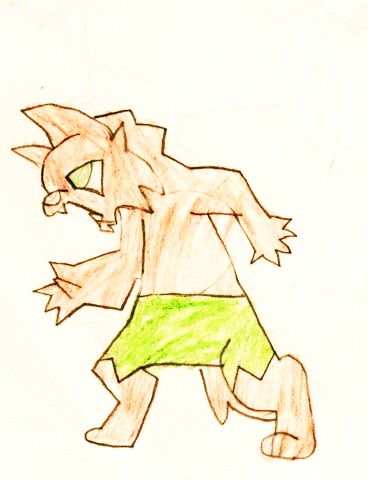 wolf form due to the treachery of his wife’s evil magic. The fairytale of Red Riding Hood portrays the wolf as an evil creature out to kill its victims. Lycanthrope (from the Greek term for a man-wolf) is a person who believes that they have changed into a wolf and it is a recognised medical condition. People behave like a wolf, including howling, going down on all fours, ‘gnawing’, attacking others with the intent to tear their flesh and drink their blood, allied with hyper sexual activity and a belief that they will grow fur and fangs.
In Slavic and European folklore there are links between vampires and werewolves. In Greek and Serbian lore for example, a werewolf was condemned to become a vampire after death. In some rural areas of Europe those who died sinners could come back to life as blood-drinking wolves, returning to their human corpse at daylight. They could be killed by decapitation and exorcism. In Serbia the werewolf and vampire are known collectively as one creature, the volkodlak.
Many thousands of cases of werewolves were reported between 1520 and 1630 in the late Middle Ages in Europe and there were a number of witch-werewolf trials, where werewolves were seen as Satan’s creatures who craved human flesh. Werewolf legends, like those of vampires, were also used to explain serial killings in the past.
Werewolves also featured in Nineteenth Century tales of Gothic horror. ‘Hugues, the Wer-wolf’, by Sutherland Menzies, published in 1838, draws on much of the established folklore and legend. I was particularly intrigued by the 1896 tale of ‘The Were-Wolf’, by Clemence Housman, which features a femme-fatale who transforms into lupine form to devour her victims!
If you know of any myths and legends or early literature featuring werewolves please let us know.
Tina 🙂
In exploring the concept of werewolves in myths and legends and early literature we are beholden not only to Wikipedia but also information contained in the excellent publication, ‘The Element Encyclopedia of Vampires. An A-Z of the Undead’, written by Theresa Cheung.
Post image: Minerva Studio/Shutterstock.com

 areadersreviewblog